Planning a Dobongsan Hike is easily one of the most rewarding outdoor experiences you can have in Seoul. While many international travelers default to Bukhansan’s Baegundae, seasoned hikers often prefer Dobongsan-the dramatic northern sector of Bukhansan National Park-for its sharper ridgelines, sweeping granite formations, and vibrant autumn foliage.
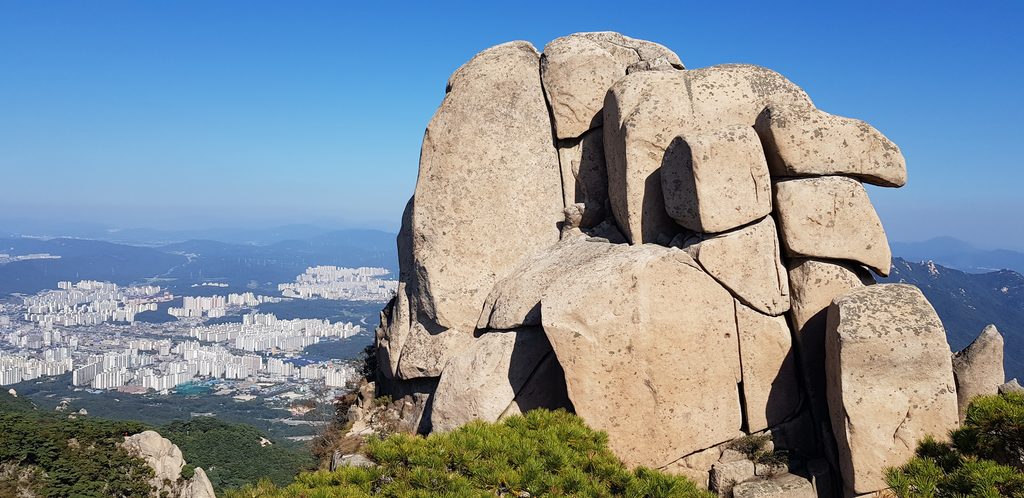
Whether you want to witness Korea’s breathtaking fall colors or scramble up steel cables overlooking the legendary Jaunbong cliff, here is everything you need to know for a seamless Dobongsan hike.
Dobongsan Hike at a Glance
- Location: Northern Seoul / Gyeonggi-do border (Bukhansan National Park)
- Trailhead: Dobongsan Station (Seoul Metro Line 1 & Line 7, Exit 1)
- Summit Goal: Sinseondae Peak (신선대, 726m) directly facing Jaunbong (자운봉, 740m)
- Distance: ~6.5 km round-trip
- Duration: 3.5 to 4.5 hours (including summit photo breaks)
- Difficulty: Moderate to Strenuous (woodland steps transitioning into steep granite scrambling)
- Entry Fee: Free
Jaunbong vs. Sinseondae: Important Summit Facts
A common source of confusion for international hikers tackling this route is the summit name:
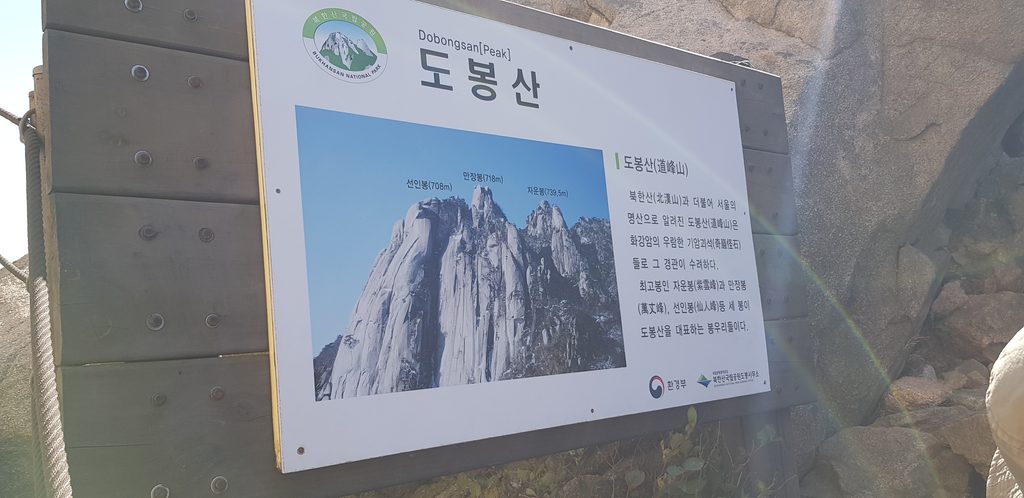
- Jaunbong (자운봉, 740m): The absolute highest point of Dobongsan. Jаunbong is a dramatic granite peak that can be admired from the surrounding trails and viewpoints. While climbing the sheer rock face itself requires specialized rock-climbing skills and equipment, hikers can enjoy spectacular views of Jaunbong from the nearby trails without technical climbing gear.
- Sinseondae (신선대, 726m): The official, safe viewpoint that all hikers climb. It sits directly opposite Jaunbong, connected by a dramatic rocky saddle. Steel handrails and carved footholds guide you right to the top, where you get a close-up panorama of Jaunbong’s massive granite face and the entire Seoul basin.
On English trail signs along your Dobongsan hike, simply follow arrows pointing toward Sinseondae / Jaunbong.
Best Time for the Dobongsan Hike: Autumn Foliage Window
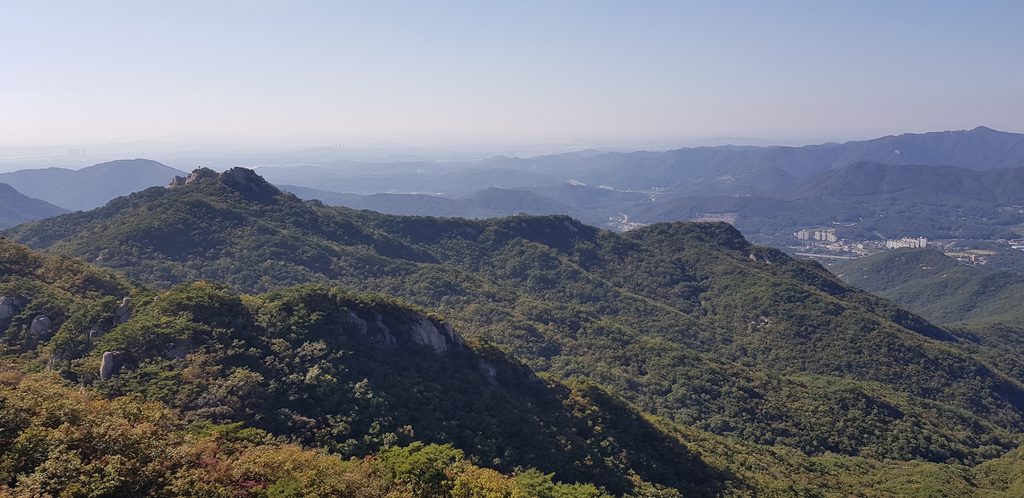
While rewarding year-round, an autumn Dobongsan hike is hard to beat. The contrast between jagged white-gray granite and fiery crimson maples creates picture-perfect scenery.
- First Autumn Foliage: Mid-October
- Peak Colors: Late October to early November
- Weather Conditions: Crisp, sunny, and dry. Mornings hover around 6°C–10°C, warming to 16°C–19°C by midday.
- Timing Tip: Start your hike early, ideally between 7:30 AM and 8:30 AM. You will catch soft morning light on the peaks and avoid peak-hour bottleneck lines at the summit cables.
The Best Dobongsan Hike Route: Step-by-step
This classic loop offers the best balance of valley scenery, rest viewpoints, and summit excitement:
Dobongsan Station (Exit 1) ➔ Outdoor Market ➔ Dobong Visitor Center ➔ Madangbawi Rock ➔ Sinseondae Peak (Summit) ➔ Valley Descent ➔ Dobongsan Station
1. Trailhead & Outdoor Market Atmosphere
Start by taking the subway to Dobongsan Station (Exit 1). Cross the road and follow the stream of colorfully dressed local hikers toward the park entrance. This 15-minute approach winds through a lively street filled with hiking gear shops, street food stalls, and local restaurants. Pick up fresh water, snacks, or a roll of gimbap (Korean seaweed rice rolls) here.
2. Lower Valley to Madangbawi Rock (마당바위)
Pass the Dobong Visitor Center and head along the main forested trail toward Madangbawi.
- The first 40-50 minutes wind through lush woodlands, stone stairs, and bubbling mountain streams surrounded by fall colors.
- As the grade increases, you will reach Madangbawi (Courtyard Rock)-a broad, sloping granite platform that feels like an open-air balcony. Take a breather here to enjoy uninterrupted vistas of northeastern Seoul and Mount Suraksan.
3. The Summit Push to Sinseondae
Past Madangbawi, the dirt path turns entirely into rock.
- Keep following sings toward Sinseondae.
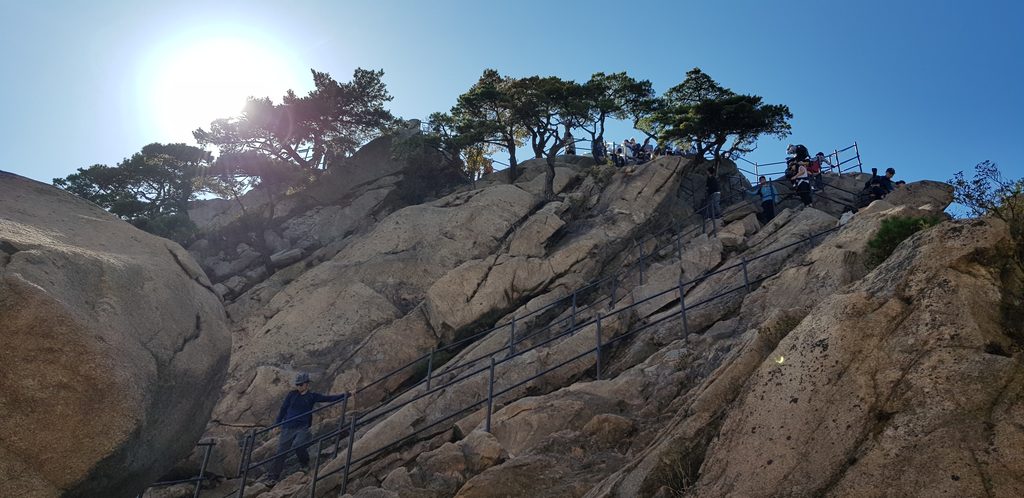
- The final 200 meters involve an exhilarating rock scramble. Steel handrails, chains, and iron footholds are bolted into the granite to help you climb safely.
- At the top of Sinseondae, step onto the fenced observation crest. Standing nose-to-nose with Jaunbong’s vertical rock pillars against the open sky is arguably the most dramatic vista in Bukhansan National Park.
4. Descent via the Valley Course
Head down the summit handrail section with care. At the junction, follow the signposts toward the Dobong Shelter / Valley course. This path is less steep than the ridgelines, saving your knees on the way back to the park entrance.
Essential Gear for a Safe Dobongsan Hike
- Hiking Boots with Reliable Grip: The upper third of the mountain is solid granite slab. Avoid worn sneakers or flat lifestyle shoes; shoes with good traction (like Vibram or sticky rubber) are strongly recommended.
- Gloves with Rubber Grip: Pulling yourself up the cold steel summit cables is much easier on your hands with a pair of work gloves. You can buy basic rubber-coated cotton gloves at any street stall near the station for ₩1,000–₩2,000.
- Layered Clothing: Ridge winds can get surprisingly cold once you stop moving. Bring a breathable base layer, an insulating mid-layer, and a packable windbreaker.
- Water & Fuel: Bring at least 1.0 to 1.5 liters of water and high-energy snacks. There are no refilling points along the upper mountain trail.
Post-Hike Feast: The True Korean Hiking Tradition
In Korea, a hike is only half complete without the post-hike meal (dwip-puri)
After finishing your Dobongsan hike, explore the bustling restaurant row right outside the mountain entrance:
- Haemul Pajeon (해물파전): A thick, crispy scallion pancake loaded with squid and seafood-the ultimate comfort food after burning 1,500 calories.
- Dubu Kimchi (두부김치): Steamed local tofu paired with stir-fried aged kimchi and savory pork.
- Makgeolli (막걸리): Chilled Korean rice wine served in traditional brass bowls. Refreshing, lightly fizzy, and deeply satisfying.
How to Get to Dobongsan
- Subway: Take Seoul Metro Line 1 or Line 7 to Dobongsan Station (도봉산역)
- Exit: Take Exit 1. Follow the crosswalk straight ahead toward the outdoor shopping street-the entrace to Bukhansan National Park is a direct 15-minute walk.
For more information about Seoul metro, Please refer to https://hiddenspotkorea.com/the-ultimate-guide-to-the-seoul-subway-system/
For more information about Bukhansan National Park, Please refer to https://www.knps.or.kr