Confused by dining in South Korea? From hidden table drawers to call buttons and free refills, here is your essential guide to navigating Korean restaurants like a local.
Eating your way through South Korea is an absolute highlight of any trip, but stepping into a local restaurant for the first time can come with unexpected surprises. If you are waiting for a waiter to seat you, searching frantically for a fork, or wondering where your check is, do not worry-dining in Korea has its own unique, highly efficient system.
Here are the 7 unwritten rules of Korean restaurant culture that will have you ordering, eating, and paying like a seasoned local.
1. The Mystery of the Missing Cutlery (Check the Drawer!)

When your food arrives and you notice no chopsticks or napkins on the table, do not panic or wave down the staff.
- The Secret Drawer: Look closely under the edge of your table. Almost every casual dining spot inn Korea features a slide-out drawer on the side containing metal chopsticks, spoons, napkins, and sometimes toothpicks.
- Chopstick Rest Hack: You will often see locals lay a small napkin down on the table to rest their cutlery on for hygiene.
2. The Magic Call Button & The Power of “Jeogiyo!”
In Korea, waitstaff prioritize your privacy. They will not interrupt your meal every ten minutes to ask how everything tastes. Instead, service is strictly on-demand.
- The Bell (Bbel): Check the tabletop, the wall beside your booth, or the napkin dispenser for a small circular call button. Press it once, and a chime will alert the staff to your table.
- No Button? No Problem: If there is no bell, make eye contact or raise your hand slightly and say clearly: “Jeogiyo!” (저기요 / Excuse me!). It is completely polite and expected.
3. Water and Side Dishes: The “Self” Culture
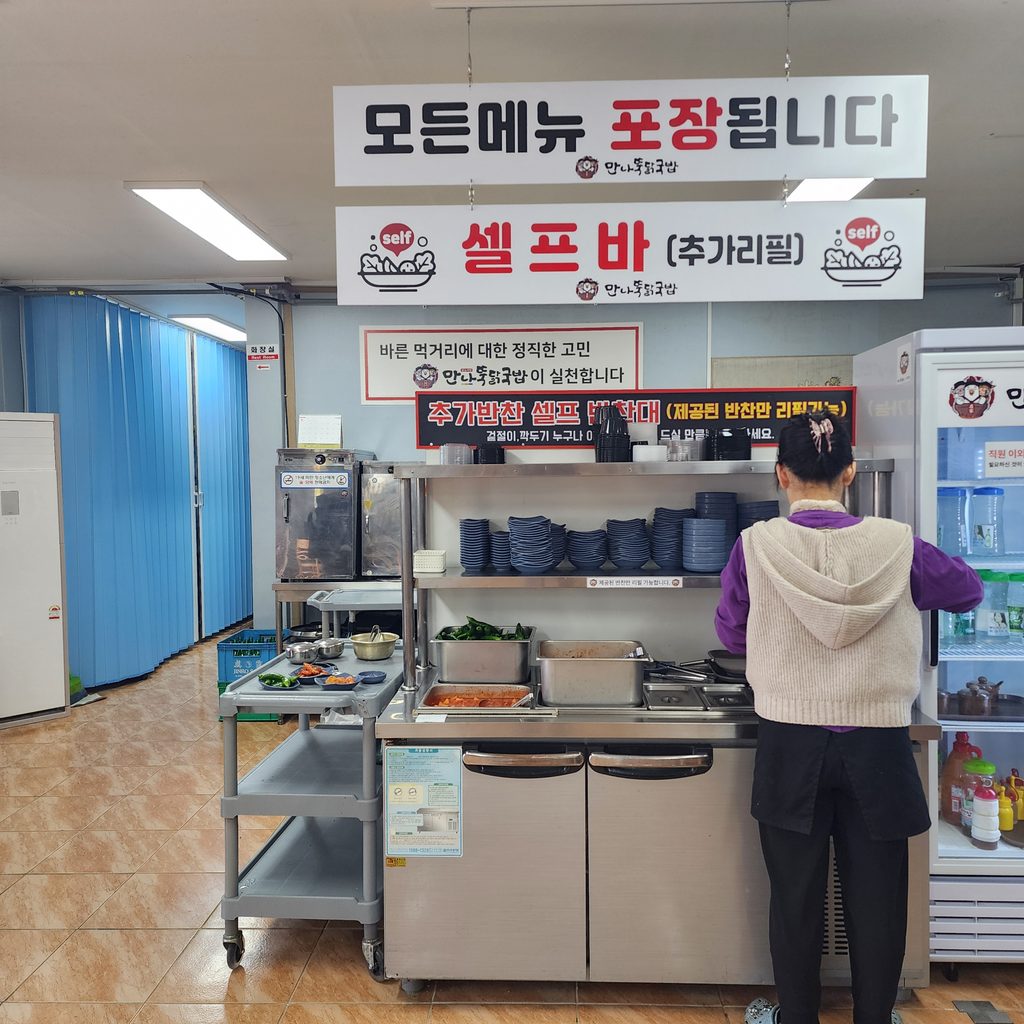
When you sit down, you will usually be handed a cold pitcher of water and small cups. If not, look around for a water dispenser labeled “Water is Self” (물은 셀프).
- Self-Service Water: Grab a stainless-steel cup from the UV sterilizer rack and fill it up yourself.
- Banchan (Side Dishes): Korean meals come with complimentary side dishes (banchan), including kimchi, pickled radishes, and seasoned vegetables. If you finish them, look for a “Self Bar” (셀프 코너) to grab refills, or ask the staff: “Deo juseyo!” (더 주세요 / More please!)
4. Zero Tipping & Absolute Efficiency
Tipping is not practiced anywhere in South Korea-not in casual noodle shops, traditional BBQ joints, or high-end dining spots.
- What You See is What You Pay: The price on the menu includes all taxes and service charges. Leaving cash on the table will only cause confusion, as the server will likely chase you down the street to return your forgotten money.
5. Pay at the Counter, Not at the Table
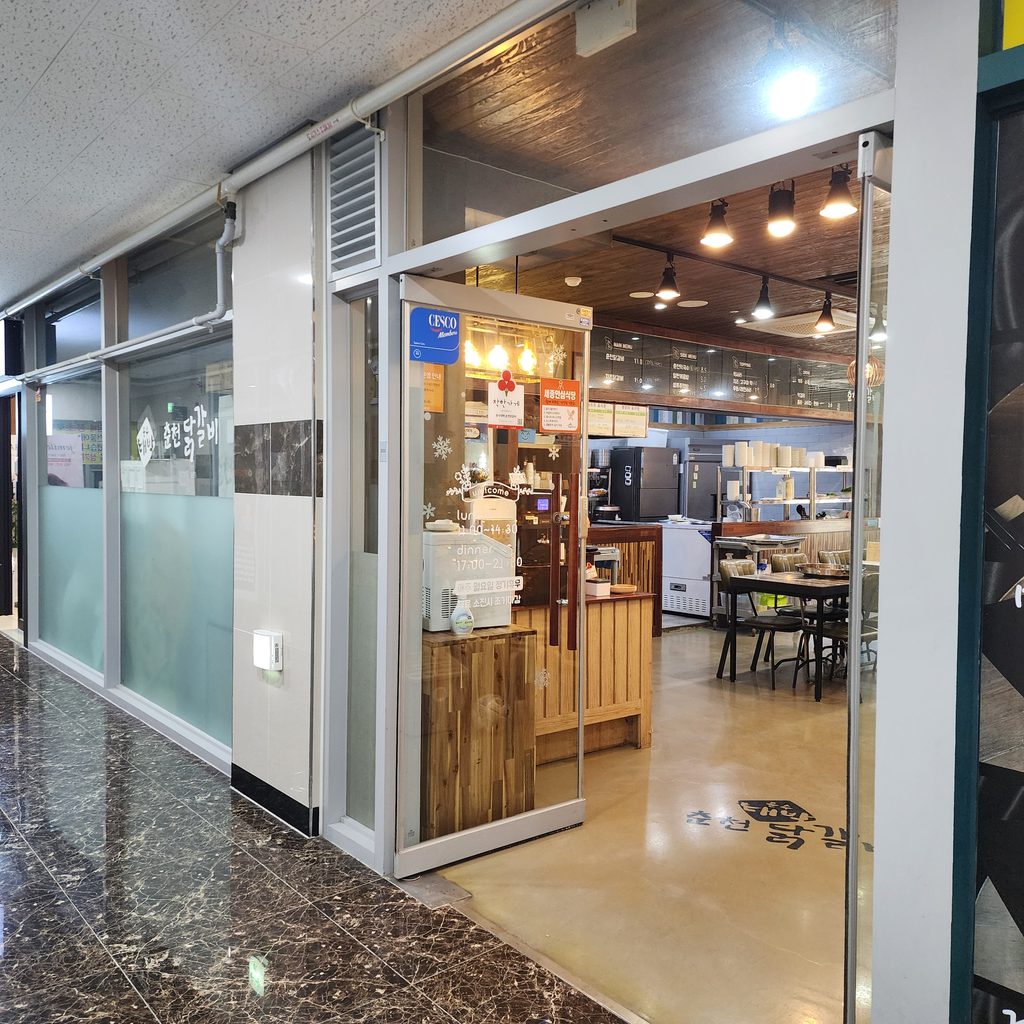
Unlike in Western dining where you ask for the check at your seat, Korean restaurant transactions almost always happen at the front register by the exit.
- The Clip Board / Receipt: When your food is served, the staff will leave a small clipboard or paper slip on the corner of your table
- Checking Out: Simply take that slip up to the front counter when you are finished. Tap your credit card or transit payment card, grab a complimentary mint or coffee from the machine by the door, and you are on your way.
6. Navigating BBQ & The 2-Person Minimum
If you are planning to eat Korean BBQ (Samgyepsal or Galbi) or hot pot stews (Jeongol / Budae Jjigae), be aware of the ordering rules:
- Minimum 2 Servings: Traditional grill and stew spots require a minimum order of 2 servings (2인분 / i-inbun) to fire up the tabletop burner.
- Solo Travelers: You are welcome to eat alone at BBQ spots, but you will generally need to pay for at least two portions of meat. For true single-portion solo dining (Honbap), head to soup restaurants (Gukbap), casual food bars (Bunsik), or fast-casual noodle joints.
7. Quick Phrase Cheat Sheet for Dining Out
- “Igeol-lo juseyo” (이걸로 주세요): Please give me this one (while pointing at the menu).
- “Mul jom juseyo” (물 좀 주세요): Please give me some water.
- “Gyesan-hae juseyo” (계산해 주세요): Check / bill, please.
- “Jal meogeoss-seumnida” (잘 먹었습니다): I ate well / Thank you for the meal (said to the owner when leaving).